

5 Things I’ve Learned From a Lifetime of Leather Binding
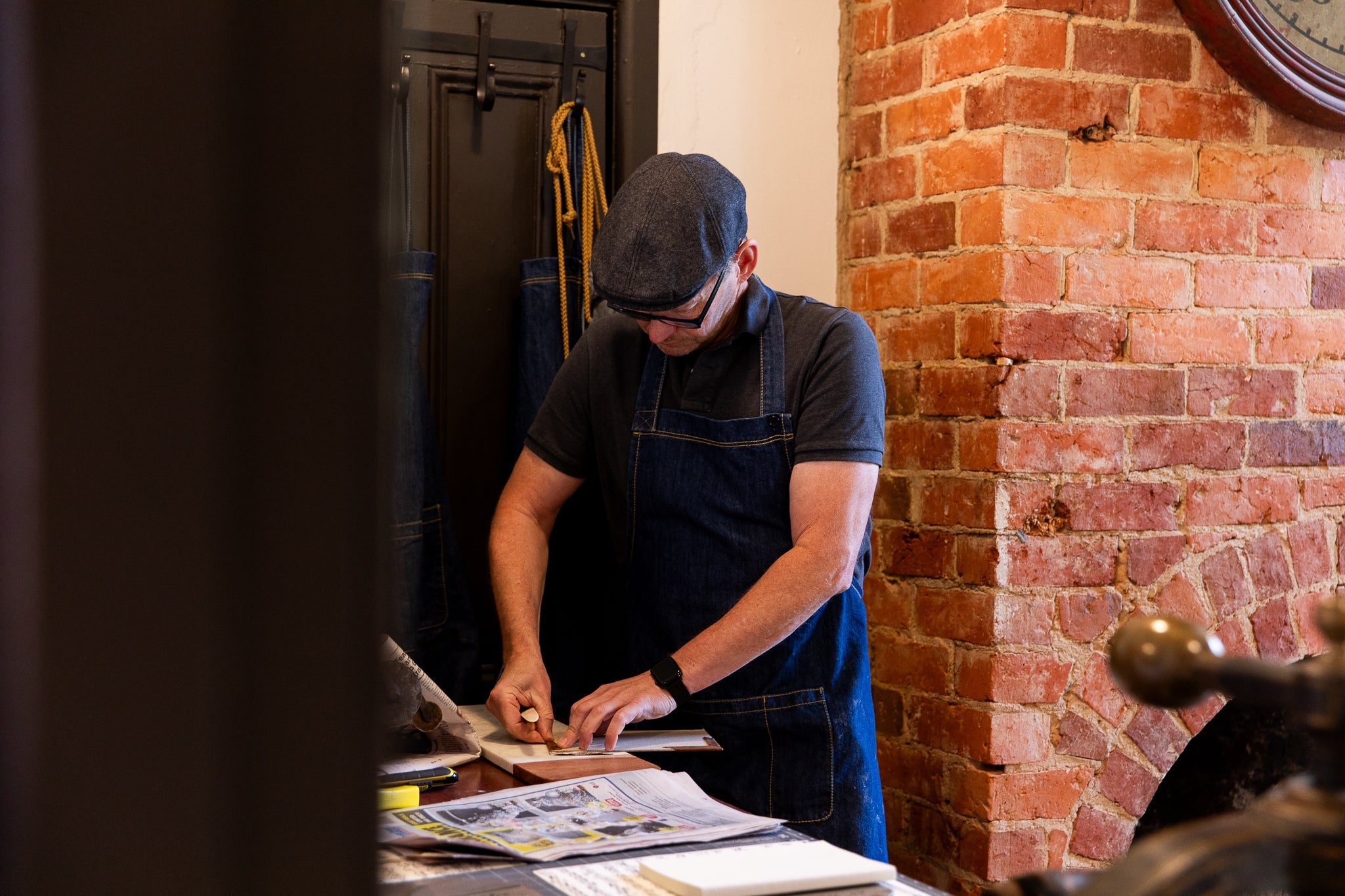
There's something that feels like one of life's little luxuries in taking a roll of leather from the rack. The smell fills the bindery the moment it's laid across the bench, or, for the larger skins, across the floor. The first few minutes aren't about doing anything. They're about looking. The grain, the variations, the way the light catches it differently depending on which way you run your hand across it. This is not the moment to rush in and start cutting. That's how expensive mistakes get made.
I've been binding in leather for well over twenty years. I've made beautiful things, and I've made expensive mistakes. The things I've learned aren't the ones I read in a book, or the things explained to me by mentors and teachers along the way. They're the ones I learned the hard way, at the binding bench, with good leather I was genuinely sorry to have ruined.
Here are five of them.
1. Leather has a grain direction
Like paper, leather has a grain, a direction in which the fibres run. Bind with the grain and your cover will lie beautifully. Bind against it and it will fight you, warping and resisting.
Testing grain direction on leather is less precise than testing it on paper, but the principle is the same: feel how it bends. Gently curve it in both directions. Go with the ease, not against it.
2. The spine can be the hardest part (and why)
The spine of a leather-bound book takes more stress than any other surface. It flexes every time the book is opened, and it’s the area most exposed to damage over time.
Getting the right thickness of leather over the spine, without building up bulk at the hinges, takes patience. I’ve learned to take my time at this point. To pare the leather thinner than I think I need to, then check the fit before any adhesive goes anywhere near it.
3. The right glue depends on the time you need
Not all glues behave the same way, and choosing the right one is about choosing the right drying time. Paste stays workable for longer, making it ideal for tasks that require shaping and adjustment. When covering a leather spine, that extra open time allows you to carefully mould the leather around raised bands and form crisp shoulders before the adhesive begins to set.
Faster-drying bookbinding adhesives are better suited to jobs where you want a quicker bond, such as covering boards and turning in corners. Like many things in leather binding, it's not about finding the "best" glue—it's about understanding what each one allows you to do before time runs out.
4. Let the cover relax before casing-in
After pasting and working the leather, the moisture content is high. If you case-in too quickly (Glue the cover onto the book block) the damp leather will pull the boards as it dries. The book will warp.
Let the cover rest. Set it under a light weight on a clean surface. Give it at least an hour (or overnight) before gluing in the book block.
5. You’ll never stop wanting to try again
This one surprised me. I assumed that after years of binding, the itch to experiment would quiet down. The opposite is true.
Every new leather behaves differently. Every new project is another chance to apply what you know against something you haven’t done before. There's always something new to keep it interesting
I’ve never finished a piece of leather binding without thinking about what I’d do differently next time. I’ve come to think of that as a feature, not a flaw.
Thinking about the lessons I've learned helped me to develop the leather bookbinding course I’ve been working on. It's something I have been asked about on repeat after every beginner's workshop and during many online course Q & A's.
The waitlist for first-access members is open now. If leather binding is something you’ve been longing to try, this is the moment to put your name down.
👉 Join the WAITLIST HERE.

Leave a comment
This site is protected by hCaptcha and the hCaptcha Privacy Policy and Terms of Service apply.