
Choosing Materials for a Handmade Book: Colour & Texture
Every handmade book starts with a decision nobody sees in the finished piece: what it's made of. Long before the sewing or the casing-in, there's a moment at the bench where a swatch of leather, a length of cloth, or a sheet of decorative endpaper gets held up to and judged on how it feels and often, how multiple pieces look together.
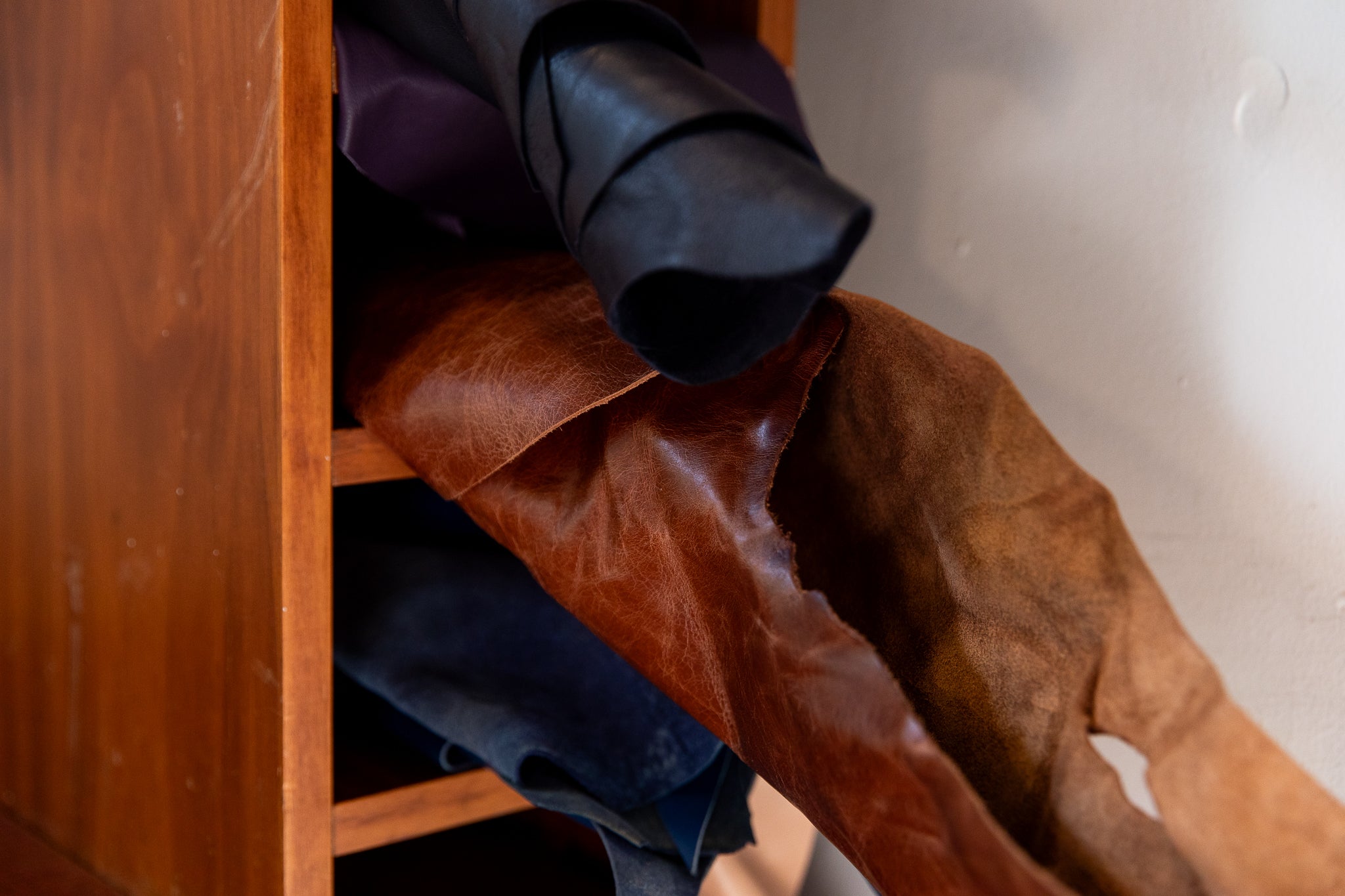
We've been thinking about this a lot lately, because it's exactly what's happening now with our leather bookbinding course. Choosing leather for a binding isn't like choosing paper. Every hide has its own grain, its own markings, its own colour. Two pieces of the same tan can behave completely differently once they're stretched over a board.
What we look for in leather
-
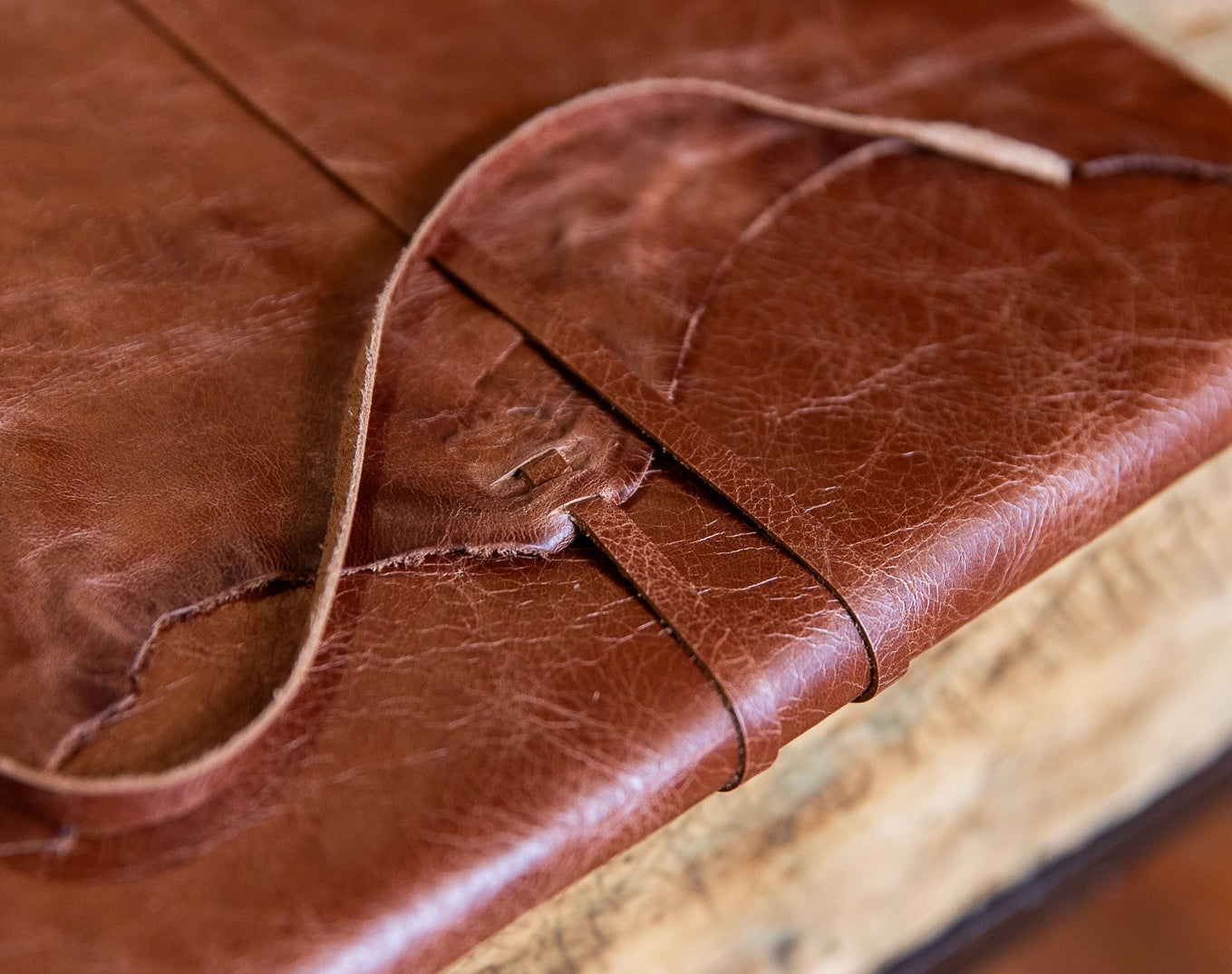
Grain — the pattern on the surface, and how visible it stays once the leather is pared and turned in.
-
Texture — some hides are smooth and taut, others have a natural softness that changes how the finished cover feels in the hand
-
How it ages — leather changes colour and texture over years of handling, and a good binding is chosen with that ageing in mind, not just how it looks on day one
The same instinct, different material
It's not only leather. Choosing cover cloth, thread and endpaper design for any custom binding comes down to the same question: does this feel right together? A binding with four or five separate decisions, like cover, spine, endpapers, decorative elements, only works if there's a common thread running through all of them. The materials need to agree with each other so they look right on the book.
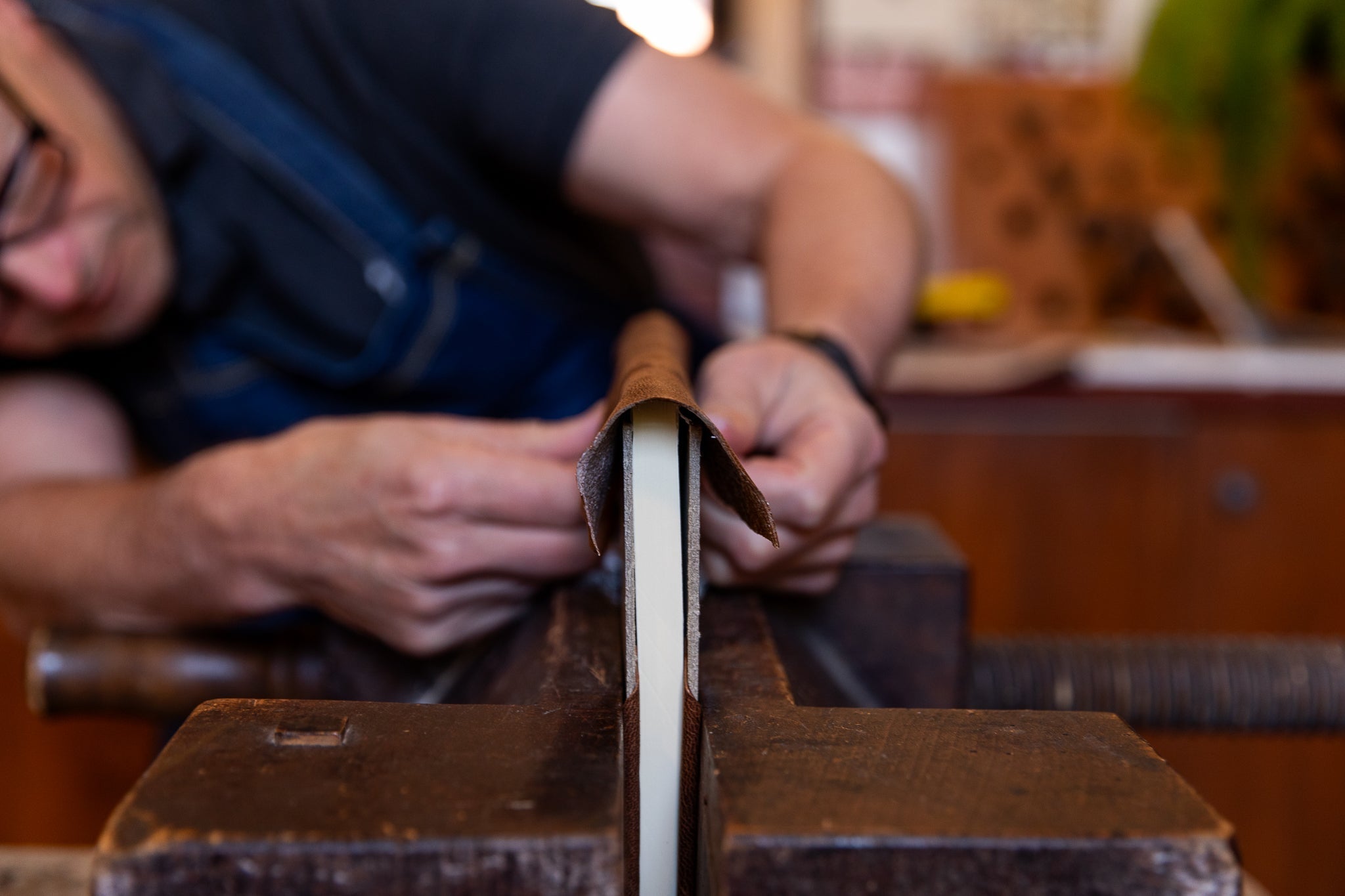
This is the part of bookbinding that's hardest to teach from a video and easiest to learn with your hands directly on the materials. On the subject of cloth used in bookbinding, we've got a whole other blog post dedicated to making your own. If you're interested in that you can read it right here.
Why this matters if you're just starting out
You don't need to know all of this before you begin. Most of it comes from handling enough material to start noticing the differences, which grain sits flatter, which cloth takes a turns in cleanly, which thread disappears into a spine instead of fighting it. If you're at the very start of that process, our free Beginner's Guide to Bookbinding is a good first step; it walks through the basics of tools & materials (and the terms we use) before you commit to anything.

Leave a comment
This site is protected by hCaptcha and the hCaptcha Privacy Policy and Terms of Service apply.