The Tools You Actually Need to Start Bookbinding (and Some You Don't)
There's a moment most new bookbinders experience. You've watched a few videos, you're completely inspired, and then you start googling 'bookbinding tools' and you immediately feel overwhelmed. Awls and bone folders and Japanese tissue and nipping presses, laying press, book press, sewing frame, decorative rolls,.... wait, do you actually need all of this?
The short answer is no. Not really, and definitely not right away.
After years of binding iand teaching beginner's bookbinding workshop, I can tell you the honest truth that the majority of books are made with a surprisingly small kit. The difference between a beginner's first project and a beautifully finished book isn't usually a fancier tool, it's knowing which simple tools to use well.
The 5 Essential Bookbinding Tools
- A bone folder. This is the one non-negotiable. A bone folder lets you create clean, sharp folds without damaging your paper. It's also helps you turn in neat corners and get nice smooth covers. A proper bone folder is worth every cent of the $15 you'll spend on one. We regularly sell out of this essential tool, but when it's in stock you'll find it here
-
Bookbinding needle and thread. You'll want a blunt-tipped bookbinding needle, sharp enough to pass through pre-punched holes, blunt enough not to split your thread. Waxed linen thread is the traditional choice; it's strong, doesn't tangle or stretch too much, and looks beautiful in the finished book.
-
A Glue tray & roller or glue brush. Bookbinding adhesive (you'll need that too!) is different from craft glue or regular PVA, it stays flexible when it dries, which matters for a book that opens and closes thousands of times and it doesn't yellow and damage the materials. A dedicated flat glue brush is all you need to apply it, but for most books I prefer to use a small paint tray and mini paint roller.
-
A cutting mat & metal ruler. Clean, straight cuts matter enormously in bookbinding. A good cutting mat protects your work surface and gives you accurate grid lines; a metal ruler (never plastic) keeps your knife from slipping. These two items will outlast dozens of other supplies.
- A utility knife & scissors. A utility knife and scissors are two tools you'll use every single session. The knife handles precise cuts like book boards, leather, book cloth & anything that needs a clean, accurate edge. Scissors are for thread, fabric, the softer stuff. Both are always within reach.
That's it. Those five things will get you through a Coptic stitch journal, a pamphlet stitch notebook, or your first hard cover binding.
3 Things Worth Upgrading Eventually
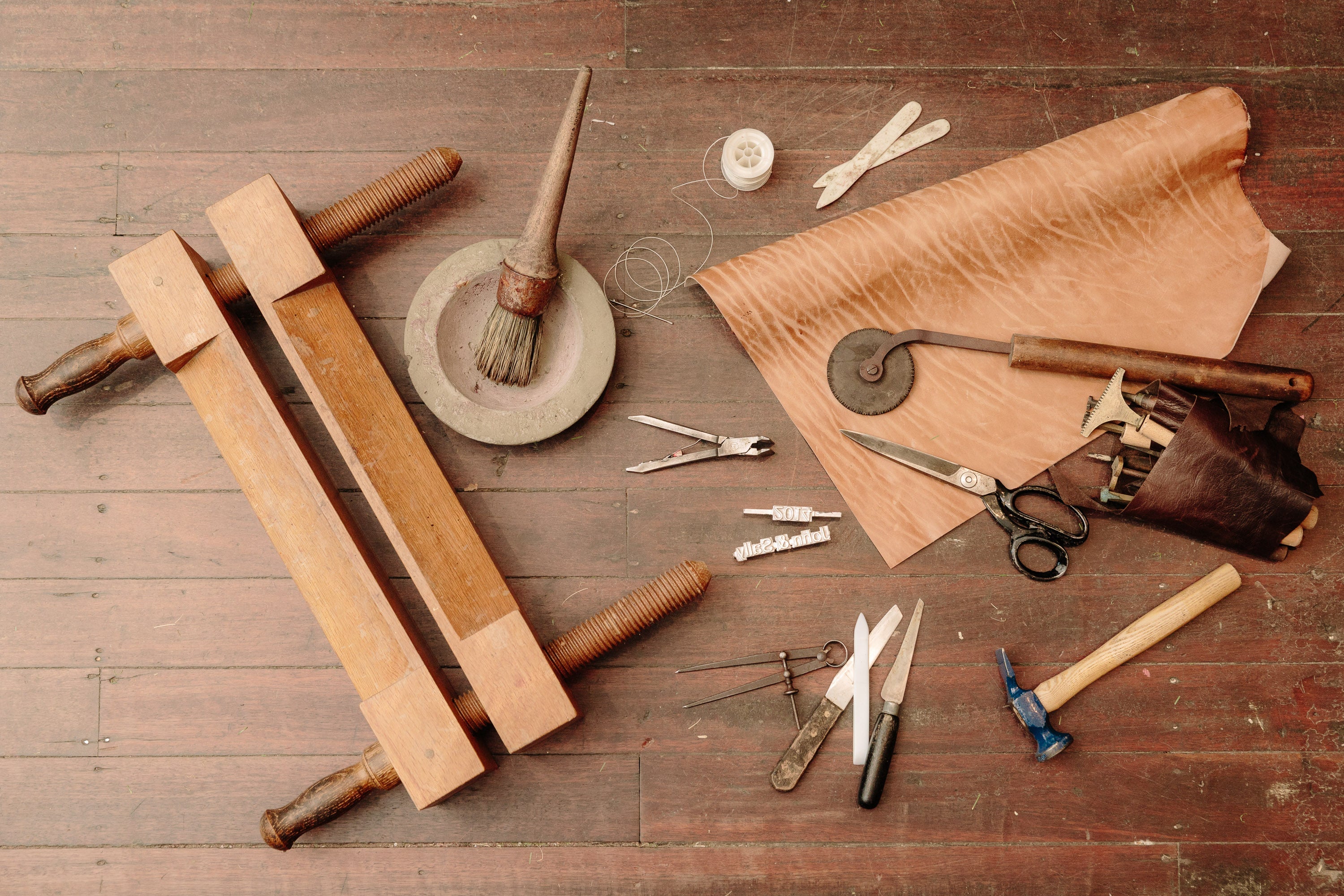
Once you know this craft is for you, a piercing cradle will make the page preparation a breeze, and a book press (or our pressing clamp) will genuinely improve your results. But they're wants, not needs. You can absolutely start without them.
The Tools You Can Skip
A finishing press is a joy to use, but you don't need one to start. Specialty decorative papers, leather, and a backing hammer can all wait. A laying press and sewing frame are wonderful — for later. Start with your five essentials and make something beautiful first
Ready to Go Deeper?
If you've read this far, you're ready to try your first project. Download the free Essential Bookbinding Tools Checklist to get a printable reference. It's a handy one to keep on the bench.
And if you've already mastered the basics and have been curious about learning leather bookbinding, we'll have something for you very soon. Make sure you sign up to our newsletter to get all the details.


Leave a comment
This site is protected by hCaptcha and the hCaptcha Privacy Policy and Terms of Service apply.